




Fatal Drunk
Driving Defense
Facing an OWI Causing Death charge in Michigan? When the stakes are 15 years in prison, you need more than a plea-bargain lawyer.
When a Tragic Accident Threatens Your Freedom and Your Future.
Facing an OWI Causing Death (Fatal Drunk Driving) charge in Michigan is one of the most terrifying, high-stakes legal battles a person can endure. Under Michigan law, OWI Causing Death is a 15-year felony. The prosecution, the media, and the public will be looking for a quick conviction. Now is not the time for a plea-bargain lawyer. You need an aggressive, science-based defense to protect your freedom, your family, and your livelihood.

The Science Behind the Defense
A fatal accident is a tragedy, but it does not automatically equal a crime. The prosecution must prove beyond a reasonable doubt that your intoxication was the direct cause of the accident. Jim Makowski brings 25 years of high-stakes trial experience to dismantle the state's case using:
High-Stakes Representation
for Professionals
For professionals, executives, and CDL drivers, a charge like this doesn't just threaten prison time — it threatens your entire legacy and career. Jim Makowski is Michigan's trusted authority in high-stakes defense. You won't be handed off to a junior associate or case manager. You get Jim Makowski's direct oversight, relentless advocacy, and zero tolerance for prosecutors trying to make an example out of you.
Dismantling the State's
Case with Science
A fatal accident is a tragedy. It is not automatically a crime. The prosecution must prove beyond a reasonable doubt that your intoxication — not road conditions, not the other driver, not mechanical failure — was the proximate cause of the death. That burden is exploitable.
OWI Causing Death prosecutions in Michigan depend on stacking two separate burdens of proof: intoxication at the time of driving, and causation of the death. Both can be challenged independently. A defense that concedes one while attacking the other can still result in a dismissal, reduction, or acquittal. Jim Makowski approaches every fatal OWI case as a multi-front battle across the toxicology evidence, the accident reconstruction, and the medical causation record.
Accident reconstruction challenges: Police accident reconstruction is not infallible. Skid mark analysis, sight line calculations, vehicle speed estimates, and road condition documentation are all subject to methodological challenge. Independent accident reconstruction experts retained by the defense frequently reach different conclusions than law enforcement, and those conclusions can introduce reasonable doubt on causation even when intoxication is conceded.
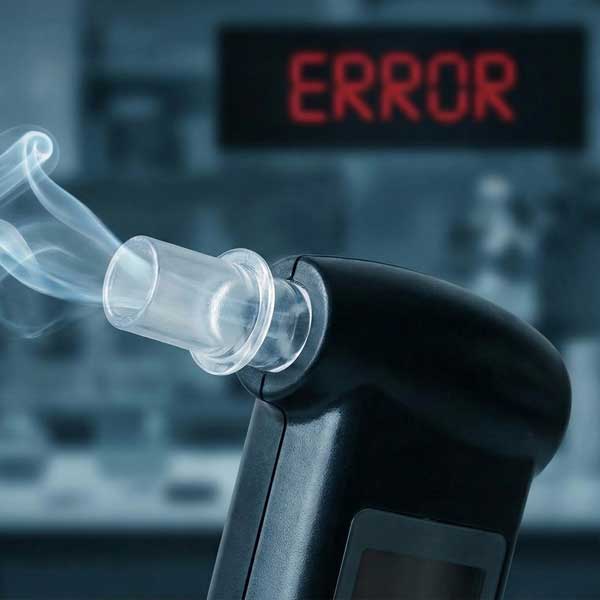
Forensic toxicology challenges: Blood draws in fatal accident cases are often taken under emergency room conditions, introducing chain of custody issues, improper preservative ratios, contamination risk, and fermentation artifacts that can falsely elevate BAC results. Breathalyzer results in the field, where applicable, carry their own calibration and operator certification challenges. The reported BAC is a starting point for cross-examination, not a closed question.
Medical causation challenges: When a fatality involves a victim with pre-existing medical conditions, delayed treatment, or a traumatic mechanism inconsistent with the alleged speed, independent medical expert review can establish that the death was not caused or accelerated by any conduct attributable to the defendant. Causation in fatal OWI is a medical and scientific question, not just a legal one.
The Stakes Beyond Prison:
Career, License, and Legacy
For professionals, executives, and CDL drivers, an OWI Causing Death conviction doesn't just mean prison time — it means the permanent destruction of everything you've built. That is not hyperbole. It is the legal reality.
OWI Causing Death is a felony conviction. Unlike misdemeanor OWI offenses, it is not eligible for expungement under Michigan's Clean Slate Act. It carries mandatory lifetime license revocation with no guaranteed path to reinstatement. Every professional license, federal security clearance, and CDL held by the defendant is immediately at risk. The consequences extend to firearms rights, immigration status, and future employment eligibility. This is why the defense cannot wait and why the first 72 hours are critical.
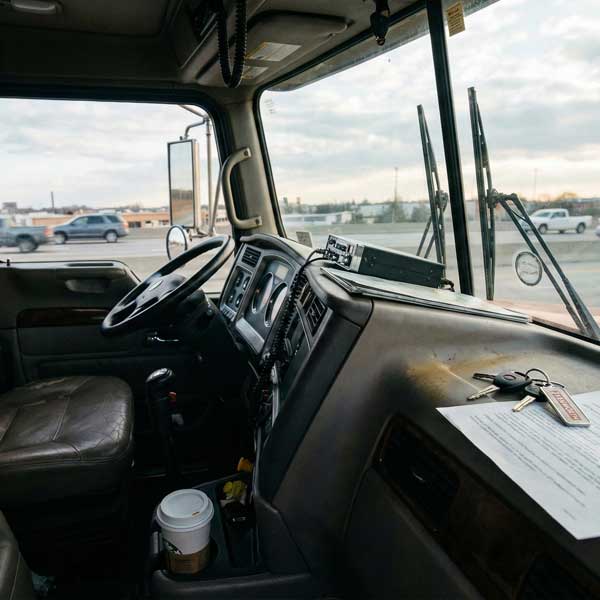
CDL and commercial drivers: A CDL holder convicted of any OWI felony faces permanent federal CDL disqualification. There is no restricted commercial license, no hardship waiver, and no administrative appeal. For professional truck drivers, delivery operators, and commercial transportation workers, the conviction eliminates the career entirely. The only defense is preventing the conviction.
Licensed professionals and executives: Physicians, nurses, attorneys, engineers, real estate professionals, and other LARA-licensed professionals face mandatory self-reporting of a felony conviction and are subject to immediate license suspension or revocation proceedings. Makowski Legal coordinates criminal defense with professional licensing strategy from the first consultation, pursuing outcomes that protect both the criminal record and the professional standing simultaneously.
Security clearances and federal employment: A felony OWI Causing Death conviction requires disclosure on federal security clearance applications (SF-86) and is grounds for clearance revocation under Guideline G (alcohol) and Guideline J (criminal conduct). Federal employees, defense contractors, and military personnel facing these charges require defense counsel who understands how every possible disposition — guilty plea, reduction, acquittal — affects the clearance. Makowski Legal assesses clearance implications alongside the criminal defense strategy from day one.
Frequently Asked Questions
What Michigan OWI Causing Death defendants need to know
Under MCL 257.625(4), OWI Causing Death occurs when a person operates a motor vehicle while under the influence of alcohol or a controlled substance, or with a BAC of .08 or above, and that operation causes the death of another person. It is a 15-year felony, carrying up to 15 years in prison, a fine of $2,500–$10,000, lifetime license revocation, and restitution. It is prosecuted as a serious violent felony, not a traffic offense, and the prosecution typically assigns experienced felony prosecutors to these cases. Immediate, experienced defense counsel is not optional — it is essential.
Yes. Dismissal is achievable when the prosecution's evidence of intoxication or causation cannot withstand pre-trial challenge. If the blood draw was improperly handled, the BAC evidence may be suppressible. If the accident reconstruction does not support the prosecution's causation theory, that element may fail. Charge reduction to a lesser felony (OWI causing serious injury, felony OWI) or even a misdemeanor is possible in cases where causation is genuinely disputed or where intoxication evidence is significantly weakened. Every case turns on its specific evidence, and the defense strategy is built around the weakest links in the prosecution's chain.
Michigan does not impose a statutory mandatory minimum prison sentence for a first OWI Causing Death conviction, but the Michigan Sentencing Guidelines produce a recommended minimum range based on the offense and prior record that judges are expected to follow and must articulate reasons to depart from. For a defendant with no prior record, the guidelines typically produce a recommended minimum in the range of 19–38 months. Sentencing advocacy — including expert mitigation, character evidence, and a comprehensive sentencing memorandum — is a critical component of the defense even when a conviction cannot be avoided. Jim Makowski handles sentencing as aggressively as trial.
A causation defense attacks the prosecution's requirement to prove that the defendant's intoxication — not some other factor — caused the death. Michigan requires both proximate cause (the defendant's OWI was a direct cause of the death) and factual cause (but for the defendant's conduct, the death would not have occurred). A causation defense may argue that weather, road conditions, the victim's own negligence, mechanical failure, or the victim's pre-existing medical condition was the proximate cause of death regardless of the defendant's BAC. Expert accident reconstruction and independent medical testimony are the primary tools. In a case where the defendant was technically over the legal limit but the accident would have happened anyway due to the other driver running a red light, the causation defense can be dispositive.
OWI Causing Death defendants are typically arraigned and bond is set by the district court judge at first appearance. Bond amount and conditions depend on the defendant's prior record, ties to the community, flight risk assessment, and the specific facts of the case. In many cases, defendants with no prior record and strong community ties can obtain bond and remain free pending trial. However, prosecutors routinely seek high cash bond or even no-bond detention in fatal OWI cases, particularly when the defendant's BAC was significantly elevated or when there are aggravating factors. Having defense counsel present at the arraignment — or seeking an emergency bond review — can make the difference between pretrial detention and release.