




Michigan Slip & Fall Attorney For Premises Liability Claims
Property owners who ignore known hazards don't earn the benefit of the doubt. You were injured because someone chose not to fix what they knew was dangerous. You were injured because a property owner chose not to fix a dangerous hazard.
Slip, Trip & Fall
(Premises Liability)
Property owners have a legal duty to maintain safe premises for visitors. When negligent maintenance, inadequate warning, or ignored hazards cause your injuries, you have the right to hold them accountable, but only if you act before the evidence disappears.
Michigan premises liability cases turn on three elements: the existence of a dangerous condition, the property owner's knowledge of that condition, and the causal relationship between the condition and your injury. Defendants contest all three, and Michigan gives them an additional weapon most states do not: the "open and obvious" doctrine, which can bar recovery entirely if the court finds the hazard was visible and apparent to a reasonable person.
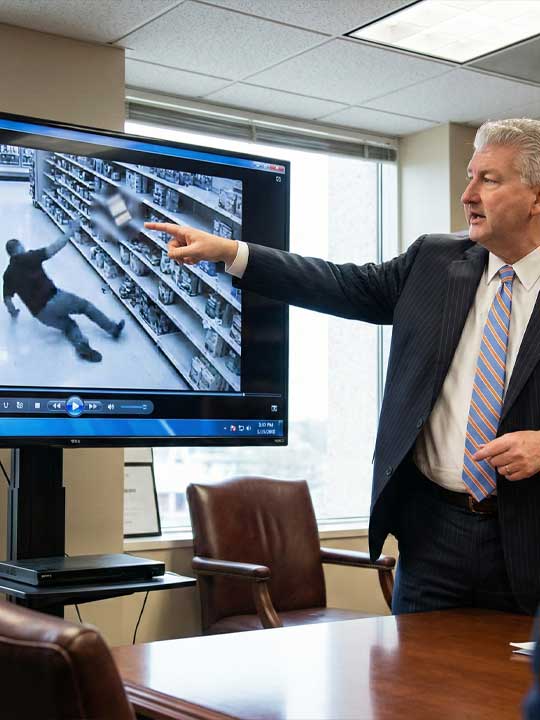
Makowski Legal handles slip and fall, trip and fall, stairway collapse, inadequate lighting, and hazardous premises claims against commercial properties, residential landlords, government entities, and retail establishments, investigating every case as if it is going to trial, because Michigan's "open and obvious" defense requires aggressive rebuttal at every stage from pre-suit demand through verdict.
The Premises Liability Reality
Michigan's premises liability law arms defendants with powerful defenses. Understanding them, before you speak to an adjuster, before evidence disappears, is what separates recoverable cases from lost ones.
The duty a Michigan property owner owes you depends on your legal status. Business invitees, customers, clients, guests, are owed the highest duty: the owner must not only warn of known hazards but must inspect for and correct them. Defendants routinely dispute invitee status to reduce their exposure.
The notice requirement is central to every case. A property owner is only liable for a dangerous condition they knew about, or should have known about through reasonable inspection. Actual notice means the owner knew the condition existed. Constructive notice means it existed long enough that reasonable inspection would have revealed it. Proving constructive notice requires documentation of when the condition arose, which is why immediate investigation is critical.
Report the incident and obtain a written incident report before leaving. Photograph the hazard, your injuries, your footwear, and the surrounding area before conditions change. Get every witness's contact information. Seek medical treatment the same day. Contact an attorney before providing any statement to the owner's insurance carrier, as they will use your words to limit their liability.
Navigating the
"Open and Obvious"
Doctrine
Michigan's most powerful premises liability defense, and also the most overused. Knowing how to defeat it is what distinguishes outcomes in Michigan slip and fall cases.
Michigan law holds that property owners have no duty to warn of or repair conditions that are "open and obvious," meaning conditions a reasonable person would discover upon casual inspection. Defense counsel invokes this doctrine as a first-line motion to dismiss in virtually every premises liability case.
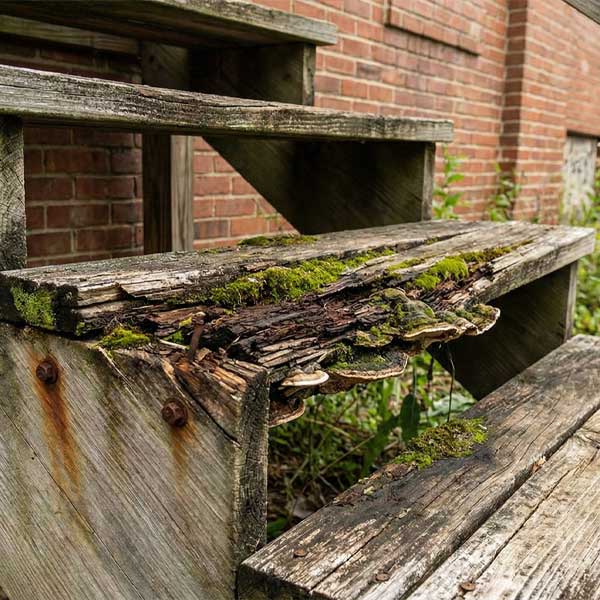
The doctrine is not absolute. The "special aspects" exception allows a plaintiff to overcome it by demonstrating that the hazard had features making it unreasonably dangerous despite its visibility. Special aspects exist when a condition is effectively unavoidable, blocking the only entrance or exit, or when the risk of severe harm is so significant that it creates unreasonable danger even if observed. Ice at an entrance that cannot be avoided, a broken stairway with no alternative path, and unmarked drop-offs on accessible walkways have all been found to constitute special aspects in the right factual record.
Courts have also found the doctrine inapplicable where the property owner should have anticipated that visitors would be distracted from the hazard by the nature of the business, a grocery store's displays drawing attention away from a floor hazard, for example. Building this argument requires detailed investigation of the property's layout, lighting, and the conditions of the visit.
Every slip and fall case at Makowski Legal is investigated for special aspects and distraction arguments before any demand is made. That record must be created immediately, before the property is modified, the hazard repaired, or surveillance footage overwritten.


The Evidence Checklist
Property owners have every incentive to make hazardous conditions disappear, and their lawyers begin building the defense before you've left the emergency room.
At the Scene. Photograph the specific hazard from multiple angles before it is corrected. Photograph the surrounding area capturing lighting conditions, warning signs, or their absence, and the general state of maintenance. Photograph injuries and footwear. Identify every witness and get their contact information before leaving.
The Incident Report. Request a written incident report from the property manager before leaving and obtain a copy. If they refuse, document that refusal. Incident reports frequently contain admissions about the condition's existence that cannot be walked back.
Surveillance Footage. Most commercial properties have surveillance cameras. Video of the fall and the condition before it is often the most probative evidence in a premises liability case. Standard commercial systems overwrite footage in 30-72 hours. Makowski Legal sends preservation demand letters immediately upon retention.
Maintenance Records. Property owners maintain records of inspections, cleaning logs, repair requests, and prior incidents. These records, obtained through discovery, frequently reveal the owner knew about the condition, failed to repair it, and failed to warn. Prior incidents involving the same hazard are particularly powerful evidence of knowledge.
Medical Records. Seek medical treatment the same day. Gaps between the incident and first treatment become causation arguments for the defense. Consistent records documenting the mechanism of injury and treatment course are essential to establishing both causation and damages.
Frequently Asked Questions
Michigan premises liability claims: what you need to know
Four elements: duty, breach, causation, and damages. As a business invitee, the property owner owes a duty to inspect, discover, and either repair or warn of hazards. Breach requires showing the owner knew or should have known about the dangerous condition and failed to act, through actual notice or constructive notice. Causation ties the breach directly to the injury. Michigan's comparative fault rules can reduce recovery if there is shared responsibility, but a partial-fault case is still worth pursuing.
Michigan's most-used slip and fall defense, but not a complete bar to recovery. Property owners have no duty to warn of conditions a reasonable person would discover on casual inspection. However, "special aspects" (effectively unavoidable hazards, conditions presenting an unreasonably high risk of severe harm, or distractions causing reasonable people not to notice the hazard) can overcome it. Do not assume a case is defeated by this argument without a full factual analysis.
Michigan's modified comparative fault rule allows recovery as long as you are not more than 50% at fault. Your recovery is reduced proportionally. Insurance companies routinely argue distraction, improper footwear, and inattention to push your fault percentage over 50%. Building the factual record early is the most effective counter.
Three years from the date of injury under MCL 600.5805, but shorter deadlines apply. Falls on government property require a notice of intent within 120 days under MCL 691.1404. Missing this deadline is typically fatal to the claim. Do not wait. Critical evidence disappears quickly.
Photograph everything before anything is moved or cleaned up. Report the incident and request a written incident report. Get witness names and contact information. Seek medical treatment immediately, even if injuries seem minor. Preserve the footwear worn at the time. Do not give a recorded statement to any insurance adjuster until after speaking with an attorney.